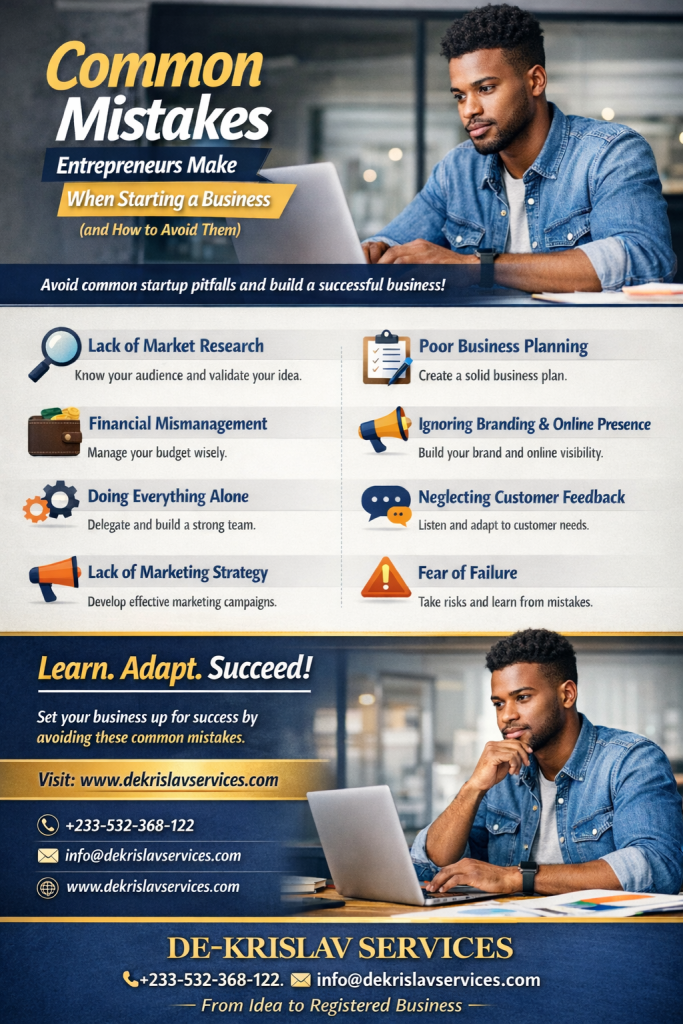









Starting a business is an exciting and rewarding journey, but it also comes with challenges that can derail even the most passionate entrepreneur. Many startups fail not because the idea is bad, but because of avoidable mistakes made in the early stages. Understanding these common entrepreneurial mistakes can help you build a strong foundation for long-term success.
In this SEO-optimized guide, we highlight the most common mistakes entrepreneurs make when starting a business and provide practical tips on how to avoid them.
1. Lack of Proper Market Research
One of the biggest mistakes new entrepreneurs make is starting a business without conducting thorough market research. Many assume their product or service will automatically attract customers without verifying demand.
Why this is a problem:
Without market research, you may target the wrong audience, set incorrect pricing, or create a product that doesn’t solve a real problem.
How to avoid it:
- Study your target market and competitors
- Identify customer needs and preferences
- Validate your business idea before investing heavily
Proper research ensures your business is built on real demand rather than assumptions.
2. Poor Business Planning
A clear business plan acts as a roadmap for your company. Unfortunately, many entrepreneurs skip this step or create a vague plan.
Common issues include:
- Undefined goals
- No financial projections
- Lack of growth strategy
Solution:
Develop a detailed business plan that outlines your mission, target audience, marketing strategy, and financial forecasts. A strong plan improves decision-making and increases your chances of securing investors or funding.
3. Inadequate Financial Management
Financial mismanagement is a leading cause of startup failure. Entrepreneurs often underestimate startup costs or mix personal and business finances.
Key financial mistakes:
- Underpricing products or services
- Overspending on branding or equipment
- Failing to track expenses
Best practices:
- Create a realistic budget
- Separate personal and business accounts
- Use accounting tools or hire a professional
- Maintain emergency funds
Effective financial planning helps sustain your business during slow periods.
4. Ignoring Branding and Online Presence
In today’s digital world, having a strong brand and online presence is essential. Many startups delay building a website or ignore digital marketing.
Consequences:
- Low visibility
- Weak customer trust
- Missed sales opportunities
What to do instead:
- Create a professional website
- Optimize for SEO
- Use social media marketing
- Maintain consistent branding
Your brand identity and online presence significantly influence customer perception and growth.
5. Trying to Do Everything Alone
Many entrepreneurs attempt to handle every aspect of the business themselves, from marketing to accounting and customer service.
Why this hurts your business:
- Burnout
- Reduced productivity
- Slower growth
Better approach:
- Delegate tasks
- Outsource specialized work
- Build a reliable team
Successful businesses grow faster when entrepreneurs focus on their strengths and leverage expert support.
6. Neglecting Customer Feedback
Customer feedback is essential for improvement, yet many business owners ignore it or become defensive.
Risks:
- Poor customer satisfaction
- Negative reviews
- Lost loyalty
Solution:
Listen to your customers, conduct surveys, and use feedback to refine your products or services. Businesses that prioritize customer experience build stronger relationships and long-term success.
7. Lack of Marketing Strategy
Even the best product will not sell without proper marketing. Some entrepreneurs rely solely on word-of-mouth and expect customers to appear.
Common marketing mistakes:
- No digital marketing plan
- Inconsistent posting
- Ignoring SEO
What works:
- Develop a clear marketing strategy
- Invest in SEO and content marketing
- Use paid ads strategically
- Track performance metrics
Consistent marketing drives visibility, leads, and sales.
8. Fear of Failure and Slow Decision-Making
Fear can prevent entrepreneurs from making necessary decisions or adapting to market changes.
Impact:
- Missed opportunities
- Delayed growth
- Loss of competitive advantage
Advice:
Accept that mistakes are part of entrepreneurship. Learn quickly, adapt, and keep improving your business strategies.
Final Thoughts
Starting a business requires careful planning, discipline, and continuous learning. By avoiding these common entrepreneurial mistakes—such as poor planning, lack of research, weak financial management, and ineffective marketing—you can position your business for sustainable growth and success.
Entrepreneurship is a journey filled with lessons. The more prepared and informed you are, the greater your chances of building a thriving and profitable business.